
Inside the Bloodiest Chimpanzee ‘Civil War’ in History
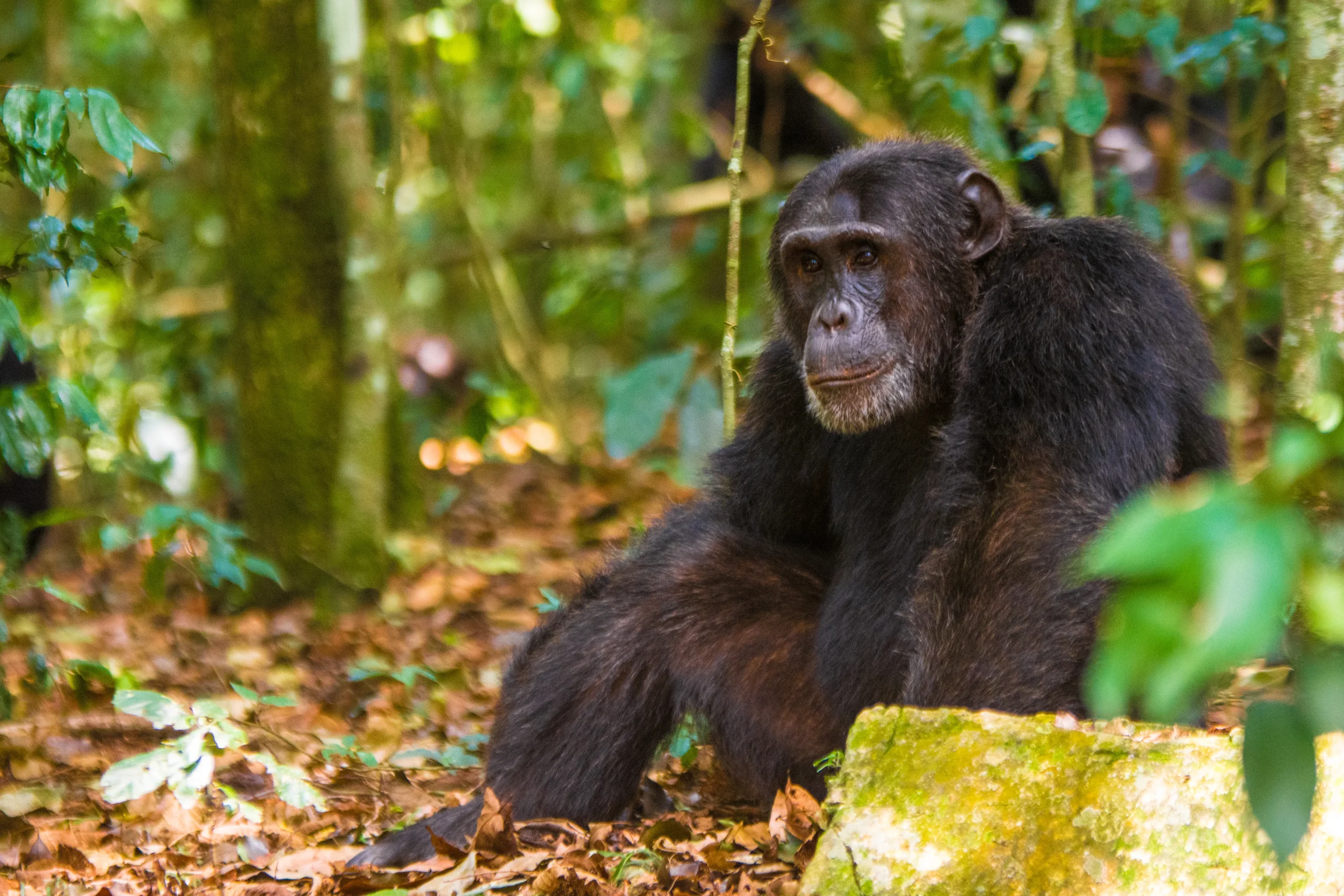
What was once the largest and most successful community of wild chimpanzees ever recorded the Ngogo Group has fractured into two warring factions. Deep within the lush canopy of Uganda’s Kibale National Park, a decades-long peace has been shattered. This isn’t just an animal scuffle; it is a strategic, lethal, and heartbreakingly human-like “civil war” that is rewriting our understanding of primate behavior.
For over 20 years, the Ngogo chimpanzees were a marvel of cooperation. With a population exceeding 200 individuals, they dominated their neighbors and thrived in a rare state of social cohesion. However, around 2015, the “social bridges”—older, influential males who helped keep different cliques united—began to die off from disease. In the power vacuum that followed, long-standing friendships dissolved into a brutal tribalism.
A House Divided: The Western vs. The Central
The community eventually split into two distinct belligerents: the Western group and the Central group. While the Central group initially held the advantage in numbers, the Western faction proved to be the more aggressive and coordinated. By 2018, the separation was complete, and the violence escalated from occasional skirmishes to planned, lethal raids.
What makes this conflict particularly chilling is the nature of the attacks. Researchers have documented the Western group launching “silent patrols” into Central territory. In these maneuvers, the chimpanzees move with eerie quietness, seeking out isolated former friends. When they find a target, the results are catastrophic. Over the last decade, researchers have recorded more than 28 deaths, including adult males and, tragically, a high number of infants.
Flipped Tables and Fatal Ambushes
In a surprising turn of tactical dominance, the smaller Western group has essentially routed their more numerous rivals. While the Central group has largely failed to retaliate, the Westerners have grown in strength, their population rising from 76 to over 100 as they seize territory and resources.
Primatologists, including the renowned John Mitani and Aaron Sandel, have noted that the violence is not random. It is strategic. The attackers often target the “testicles and throats” of their victims, ensuring that even if a rival survives the initial ambush, they are removed from the reproductive and social hierarchy. This shift from “fission-fusion” cooperation to outright “coalitionary killing” suggests that group identity can override years of personal bonds in a matter of months.
The Evolutionary Mirror
Why does this matter to us? The Ngogo “civil war” offers a dark mirror into the evolutionary roots of human conflict. For years, scientists debated whether human warfare was a product of modern culture, religion, or ideology. The Ngogo split suggests a more primal origin: when a society becomes too large to maintain individual social bonds, and when key “peacemakers” disappear, the shift toward “us vs. them” is almost inevitable.
While the Uganda Wildlife Authority has been careful to manage the “war” label to avoid unnecessary alarm for tourists, the scientific community remains transfixed. Kibale remains the premier destination for chimpanzee trekking, but for those who know the history of the Ngogo, the forest now feels a little more somber. It is a reminder that even in the heart of nature, the price of social breakdown is tragically steep.
Book Yourself a Chimpanzee Safari with Travel Hemispheres
Also Read